Categories
Game Youth Committee Shadow Museum Museum Museum Shadow Museum Shadow Museum Game Refik Veseli School theatre profile Youth Committee Shadow Museum

Shadowmuseum

2018-today

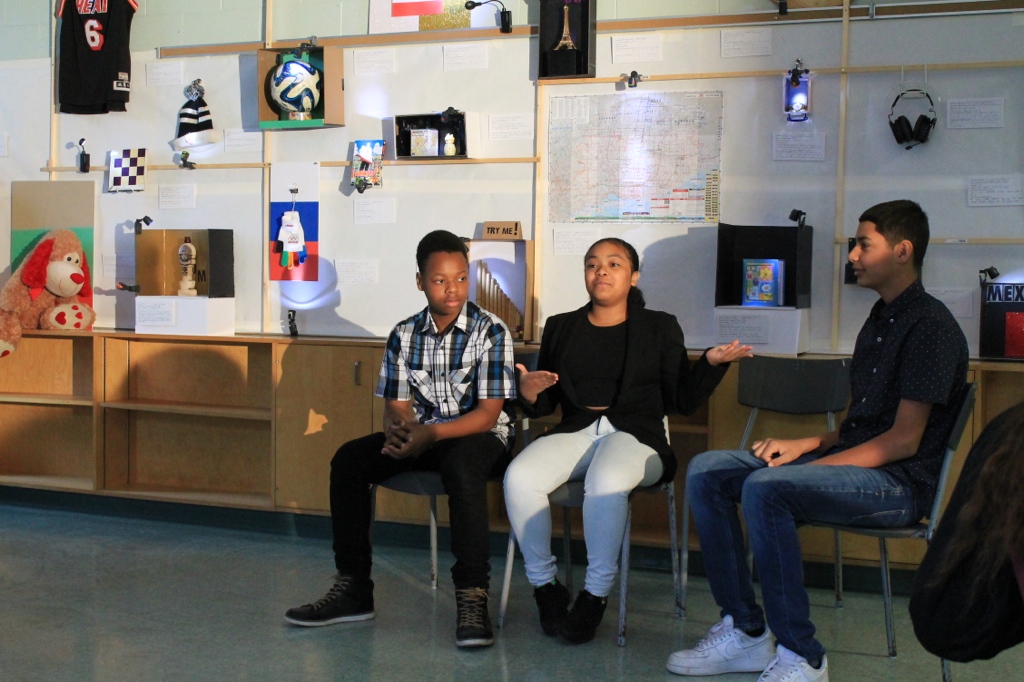
Shadowmuseum (Schattenmuseum) can be regarded as an alternative approach to the concept of a museum and has grown out of several years of cooperation between sideviews, the Jewish Museum Berlin and a group of schoolchildren from Kreuzberg in Berlin. Schattenmuseum is a structure for developing proposals for museums on how to interact with communities, collections and educational opportunities. Content, methods and artistic formats are developed and implemented collaboratively with young people and adults. Schattenmuseum is based on the actual structures, needs and goals of the respective museum. An experimental field unfurls, accompanying an exhibition for example, in which questions are asked, a space for dialogue is created or an experimental arrangement is set up involving different groups of visitors and including their perspectives in the exhibition. Schattenmuseum has been developing as an experimental arrangement in the Berlinische Galerie since the beginning of 2019. Since mid-2020, Schattenmuseum has also been collaborating with the Berlin Biennale, the KW Institute for Contemporary Art and the House of World Cultures.

To Shadowmuseum´s Website

Categories
Game Laboratory for intermediate spaces Laboratory for intermediate spaces Museum Museum Refik Veseli School theatre profile Shadow Museum Theatre Refik Veseli School theatre profile Theatre

VOIDS.UnlearnMuseum

In the Jewish Museum Berlin, the debate about the crisis of the museum as an institution has been going on for some time. sideviews was invited to take this debate as a starting point for a performative project with prospective young visitors. After researching the museum architecture with VOIDS, VOIDS.MuseumVerLernen takes a step further: the museum as a whole is analyzed creatively (from curatorship to communication structures, from security to production) in order to understand which type of relationship the institution offers both to its community and to its visitors. 

Based on the statements that 8th grade pupils of the Refik Veseli School collected in audio interviews with employees, visitors and passers-by, the findings of this study was staged as a performance and symposium. 45 employees of the museum, including the director, came together for a discussion with thepupils about the opportunities and scope for involving young people in the development of a “museum for everyone”.

Categories
Game Laboratory for intermediate spaces Laboratory for intermediate spaces Museum Museum Refik Veseli School theatre profile Shadow Museum Theatre Refik Veseli School theatre profile Theatre

Golem

Taking the “Golem” exhibition in the Jewish Museum Berlin as a basis, this project broadens the spectrum of scope of the museum and its visitors. The Golem is a mythical creature from the Jewish Talmud that has fascinated Western cultures for centuries: human life created by man and capable of existing and manifesting itself in society.

The challenge was to recount this phenomenon by theatrical means without using the classical theatre form. Pupils were encouraged to construct a golem together based on their ideas and desires. Formally, they could use elements of theatrical language: the scene, the choir, the choreography, the stage design. The result was a specially developed theatre form, which itself was a golem, created from a shared imagination – a mixture of golem show and expert congress, interactive and improvised.

Categories
Game Laboratory for intermediate spaces Laboratory for intermediate spaces Museum Museum Shadow Museum Theatre Refik Veseli School theatre profile Theatre Uncategorized

VOIDS.EmptySpaces

VOIDS proposes interactive formats for the museum concerning the architecture of the Libeskind building. A strategy is collectively developed establishing the perspective that an exhibition can also be an action in space. Accordingly, everything related to this action becomes an exhibition: the sounds, the contact with the visitors, one’s own images of the spaces.

The school pupils lead visitors through the Jewish Museum Berlin, discovering with them corners, floors and empty spaces playfully, sensually and poetically. They present the Jewish Museum with a new approach for visitors: a mixture of performance and interactive guidance, a staged museum experience by young people for young people and adults. The museum is not just a stage, but is transformed into an architectural journey.

Categories
Game Game

Camping Marianne

Artists in Tents

Social experiment part 2

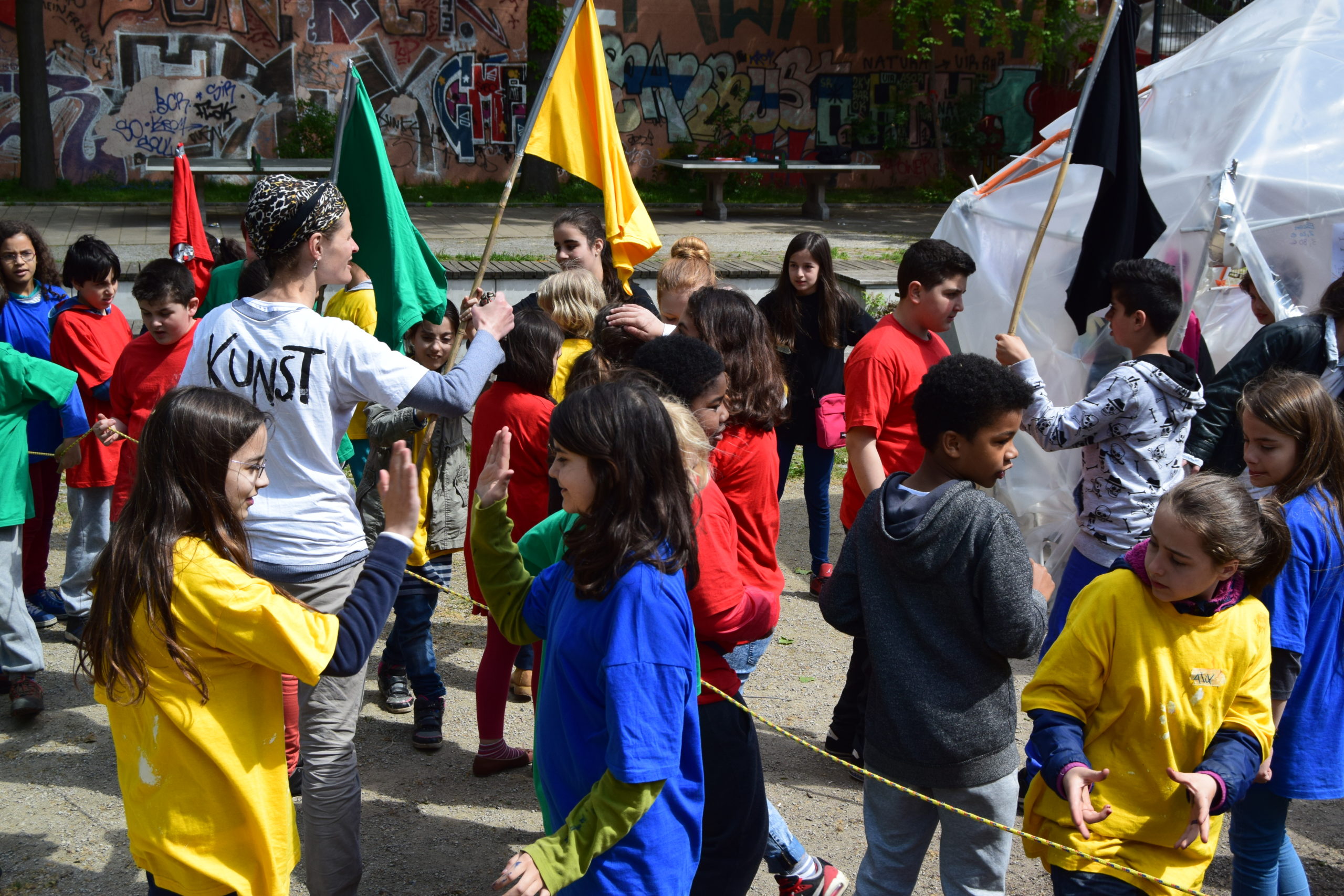
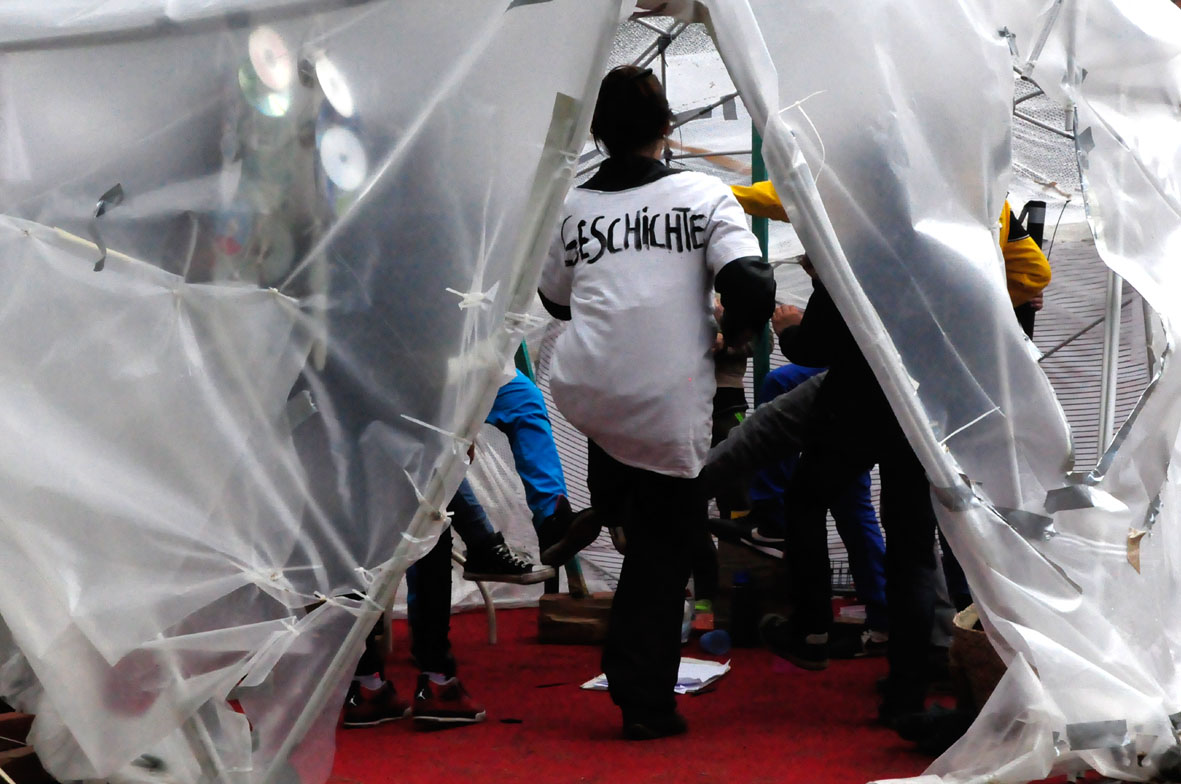
After the initial summer academy project, the idea of a campsite in the schoolyard was further developed as a social and artistic experiment: Camping Marianne, defined as a space for all forms of encounter. The camping team consisted of artists from various fields, including the architect collective raumlaborberlin and Kulturlabor e.V., a group that dealt with new forms of cooperation between education, art and science. This new version of Camping Marianne included artist residencies in which projects related to camping at school were developed. Participating in the three “Artists in Tents” were the curator Ruth Noack, the artist Seraphina Lenz and the institution StreetUniverCity Berlin. They expanded the relational perspective of the project. As the artistic director of “Camping Marianne”, sideviews supported the concept and the development of the project, curated the artists in tents and ultimately consolidated the artistic processes.

Categories
Laboratory for intermediate spaces Laboratory for intermediate spaces Museum Museum Refik Veseli School theatre profile Theatre Refik Veseli School theatre profile Theatre

The Arrival

As part of the five-year program “Cultural Agents for Creative Schools” established at the Refik Veseli School in Kreuzberg, Berlin, this project looked at the interface between the students, their own form of theatre and the museum as both a field of work and storage location for memory and identity. The starting point for this staging of space and action were two three-hour workshops in the Jewish Museum Berlin, attended by the class. The students then developed a theatrical, interactive tour of the school’s stage space, which was developed as part of the theatre project and opened to visitors at the end. The basis was the graphic novel “The Arrival” by Shaun Tan (published in German as “Ein neues Land”). A specially developed form of theatre was created in the classrooms, in which themes such as immigration, exile and foreignness were enacted collaboratively.

Categories
Game Laboratory for intermediate spaces Laboratory for intermediate spaces Game Theatre Theatre

LivingTOgether

LivingTOgether was commissioned by the German Consulate General in Toronto.

The starting point was the fall of the Berlin Wall as an unfinished historical event. sideviews initiated a communication process between two groups of students in the cities of Toronto and Berlin. Separated by geography, language, and cultural experience, they shared issues of interaction and isolation. An internet platform was developed in advance on which the children from both cities could play a virtual game together. At the same time, they worked in theatre workshops on dealing with real and imaginary borders. The students developed strategies with regard to conflicts, obstacles and different levels of meaning that arise from the realities of living together. The Berlin Wall was treated simultaneously as fact, metaphor and current reality. The students were able to look at their own social situation and examine their certainties and prejudices through the contexts of others.

The working process culminated in an exhibition of personal objects in Toronto, which the students had chosen according to their emotional significance and to which they could tell a personal story. The narratives performed live formed the conclusion of the project.

Categories
Game Game

Camping Marianne

Summer Academy

Social experiment part 1

Summer camp as a communal form of freedom was something of an obsession in the first half of the last century. It reflected the longing for the utopia of an independent social construction beyond the hegemonic order. Which ideal images of a community and its common experience can we construct and make visible today? Based on this question, a campsite was organized in the schoolyard of the Nürtingen elementary school on Mariannenplatz in Kreuzberg, Berlin. In the sense of a “system of giving”, all participants were invited to bring in material objects and their own diverse knowledge. The focus was on what a school is, what can be learned and who owns the schoolyard. We created an adventure camp of collective inventions while cooking and playing sports together. During dinner debates we discussed how we can live together in a new and different system. 

Categories
Game Game Theatre Theatre

WORLDwide… New

Is the world reality or is the world just what we imagine? 60 children from the Nürtingen elementary school in Berlin-Kreuzberg spent more than a year looking for possible answers. In this urban ethnographic experiment, students examined the social diversity in their environment on the basis of video interviews. They were confronted with a wide variety of topics: asylum seekers, politics, drug dealers, immigration and government. 

Using dramatic methods and video documentation, the research was made visible and tangible. The information on a wide variety of life plans and identities acquired in the interview workshop was then staged: in a three-week game, acting, directing, storytelling, costume design, visual arts and music were the motor that set a major negotiation process in motion. It turned out that identities and realities can be reconstructed. And that the rituals, self-images and attitudes can be changed, as can the world.