Categories
Game Youth Committee Shadow Museum Museum Museum Shadow Museum Shadow Museum Game Theatre Youth Committee Shadow Museum

Hey Siri! What is a Curator?

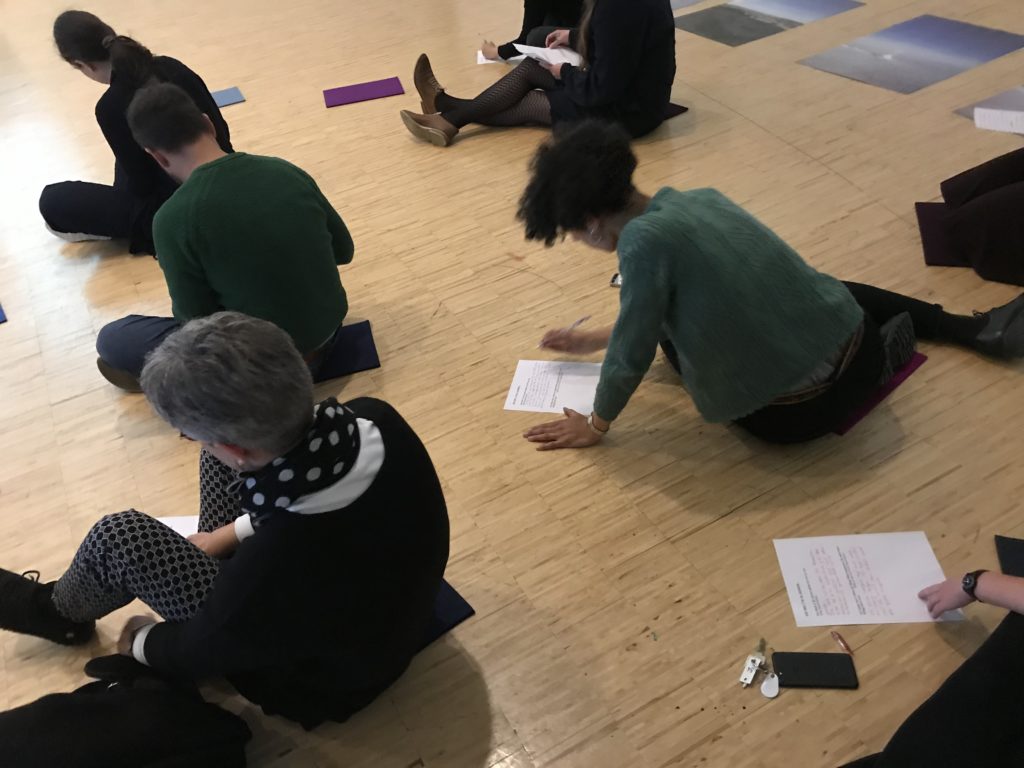
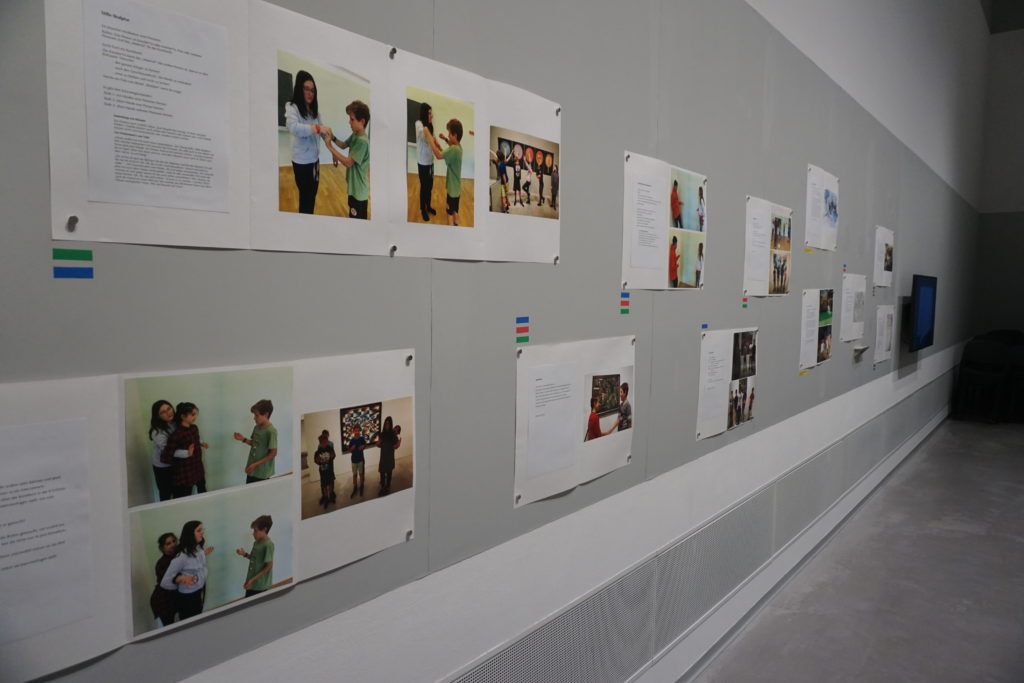
“Hey Siri! What is a curator?” is a test lab investigating creative freedom between museum and school. For a month, 50 children and young people examined the Berlinische Galerie from their perspective, coming to terms creatively with the collection of the Berlinische Galerie via the questions, “ What would my museum look like?”, “What would I exhibit, how and for whom?” and “How can I approach a work of art in a fun way?”

As part of this field of experimentation, they designed installations, texts, museum models, videos and performances referring to the collection of the Berlinische Galerie which were implemented and enacted both there and in the school: as an interactive exhibition in which the processes and artistic treatments were brought together.
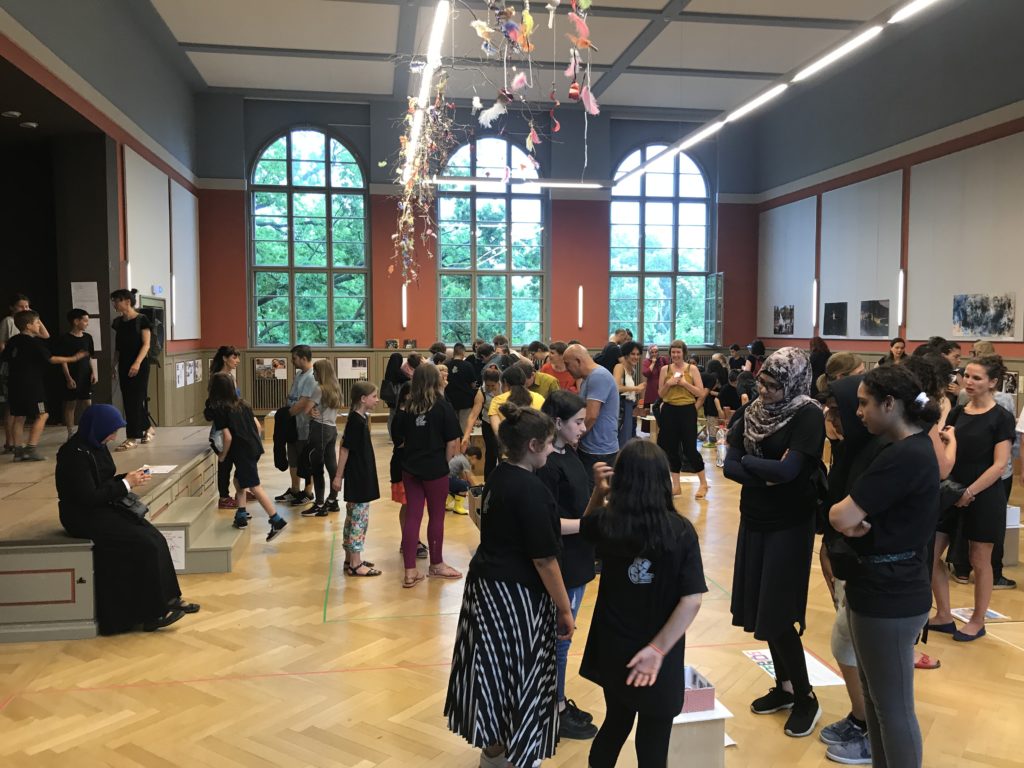
Eight museum designs from the perspective of children and young people meet a multitude of experiments concerning the artistic approach to pieces. The experiments were summarized in the SIRIBOX.

In August 2019, the Schattenmuseum Youth Committee and sideviews were invited to exhibit the SIRIBOX experiments in the Berlinische Galerie. The exhibition opened in December 2019. At the finissage of the exhibition, those interested could receive one of forty SIRIBOXES in exchange for an idea.

The SIRI-Book

In 2020, the education department of the Berlin Biennale developed a toolkit for its mediation in a workshop with the Schattenmuseum Youth Committee, based on the SIRIBOX. Applications for the SIRIBOX are still being accepted: the best ideas on how to use the SIRIBOX are selected by the Schattenmuseum Youth Committee.

Examples / Owners of the SIRIBOX
Categories
Game Youth Committee Shadow Museum Museum Museum Shadow Museum Shadow Museum Game Youth Committee Shadow Museum

Where is Planet B?

Between belief in progress and appropriation of the future

Where is Planet B? is a performative symposium in the Berlinische Galerie accompanying the exhibition “Fazit” by realities:united, a group that develops projects at the junction of art and architecture. On the occasion of the planned abandonment of nuclear and coal power in Germany, the large thermal power plants are to be modified – the steam from still active power plants will rise in the form of huge rings that can be seen from afar as a symbol of a transformation reverberating through the country.

The intervention Where is Planet B? poses critical questions about social changes and the role of art: From the perspective of Generation 200X. Special guests of the performative symposium are Jan and Tim Edler from realities:united and the curator Ruth Noack.

Categories
Game Museum Museum Shadow Museum Game Theatre

A Question of Perspective: An Opera

As part of the 1st Children’s Biennale of the Dresden State Art Collections schoolchildren created and performed an opera with the assistance of museum visitors. In 2018, the Archiv der Avantgarden (AdA) invited visitors to explore the question of the connection between art, design, performance and school. Schoolchildren from Dresden carried out research in the Japanese Palais in cooperation with the desarteur (Halle) and sideviews (Berlin) collectives. They dealt creatively and performatively with the “social space” and the importance of changing perspectives, from a framework formed by the ideas of Robert Filliou, Kurt Schwitters and Bruno Munari. 

A question of perspective: An opera was staged as an interactive performance in the Albertinum, Dresden in 2019.

Categories
Game Youth Committee Shadow Museum Museum Museum Shadow Museum Shadow Museum Game Refik Veseli School theatre profile Youth Committee Shadow Museum

Shadowmuseum

2018-today

Shadowmuseum (Schattenmuseum) can be regarded as an alternative approach to the concept of a museum and has grown out of several years of cooperation between sideviews, the Jewish Museum Berlin and a group of schoolchildren from Kreuzberg in Berlin. Schattenmuseum is a structure for developing proposals for museums on how to interact with communities, collections and educational opportunities. Content, methods and artistic formats are developed and implemented collaboratively with young people and adults. Schattenmuseum is based on the actual structures, needs and goals of the respective museum. An experimental field unfurls, accompanying an exhibition for example, in which questions are asked, a space for dialogue is created or an experimental arrangement is set up involving different groups of visitors and including their perspectives in the exhibition. Schattenmuseum has been developing as an experimental arrangement in the Berlinische Galerie since the beginning of 2019. Since mid-2020, Schattenmuseum has also been collaborating with the Berlin Biennale, the KW Institute for Contemporary Art and the House of World Cultures.

To Shadowmuseum´s Website

Categories
Game Laboratory for intermediate spaces Laboratory for intermediate spaces Museum Museum Shadow Museum Theatre Refik Veseli School theatre profile Theatre Uncategorized

VOIDS.EmptySpaces

VOIDS proposes interactive formats for the museum concerning the architecture of the Libeskind building. A strategy is collectively developed establishing the perspective that an exhibition can also be an action in space. Accordingly, everything related to this action becomes an exhibition: the sounds, the contact with the visitors, one’s own images of the spaces.

The school pupils lead visitors through the Jewish Museum Berlin, discovering with them corners, floors and empty spaces playfully, sensually and poetically. They present the Jewish Museum with a new approach for visitors: a mixture of performance and interactive guidance, a staged museum experience by young people for young people and adults. The museum is not just a stage, but is transformed into an architectural journey.

Categories
Game Game

Camping Marianne

Artists in Tents

Social experiment part 2

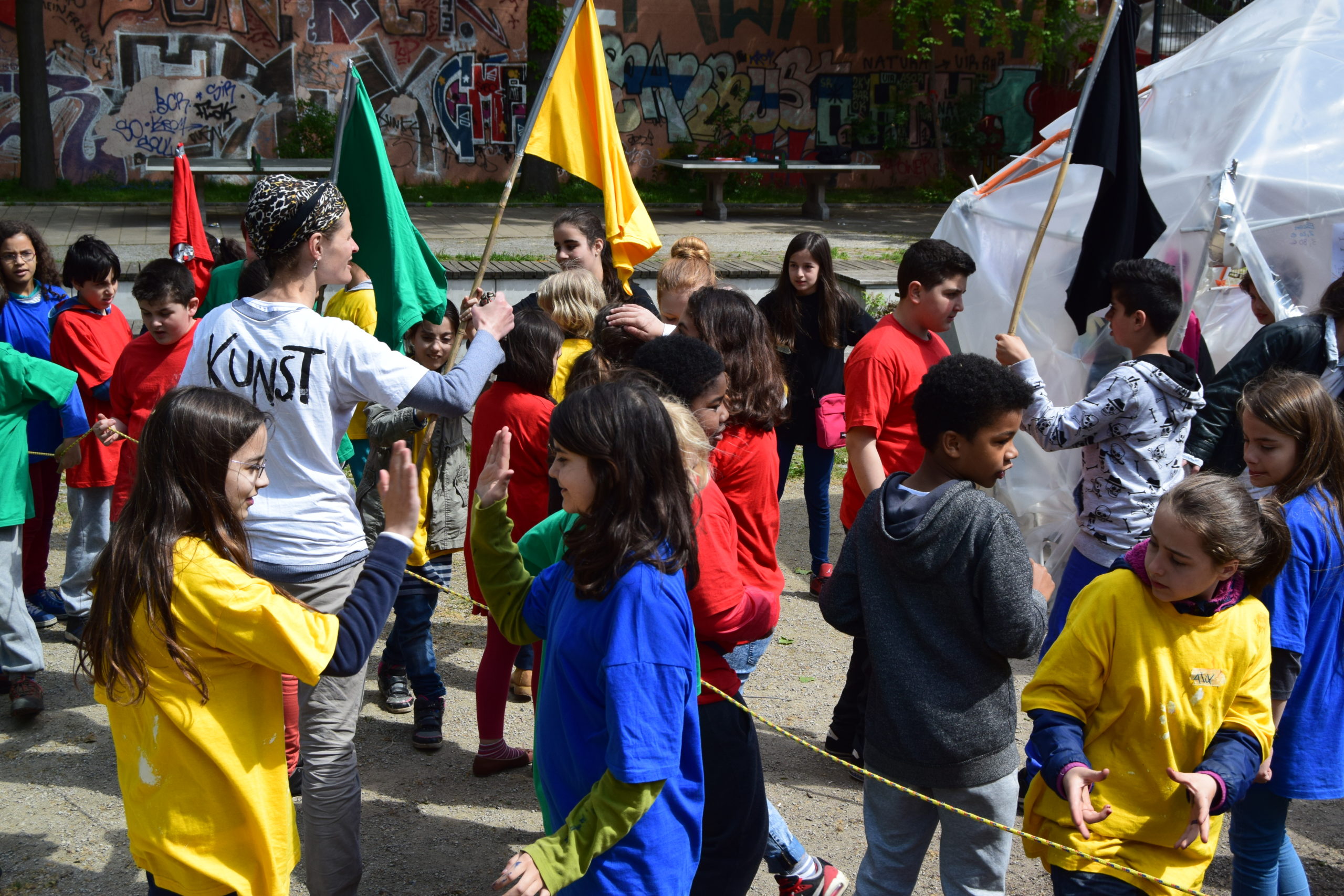
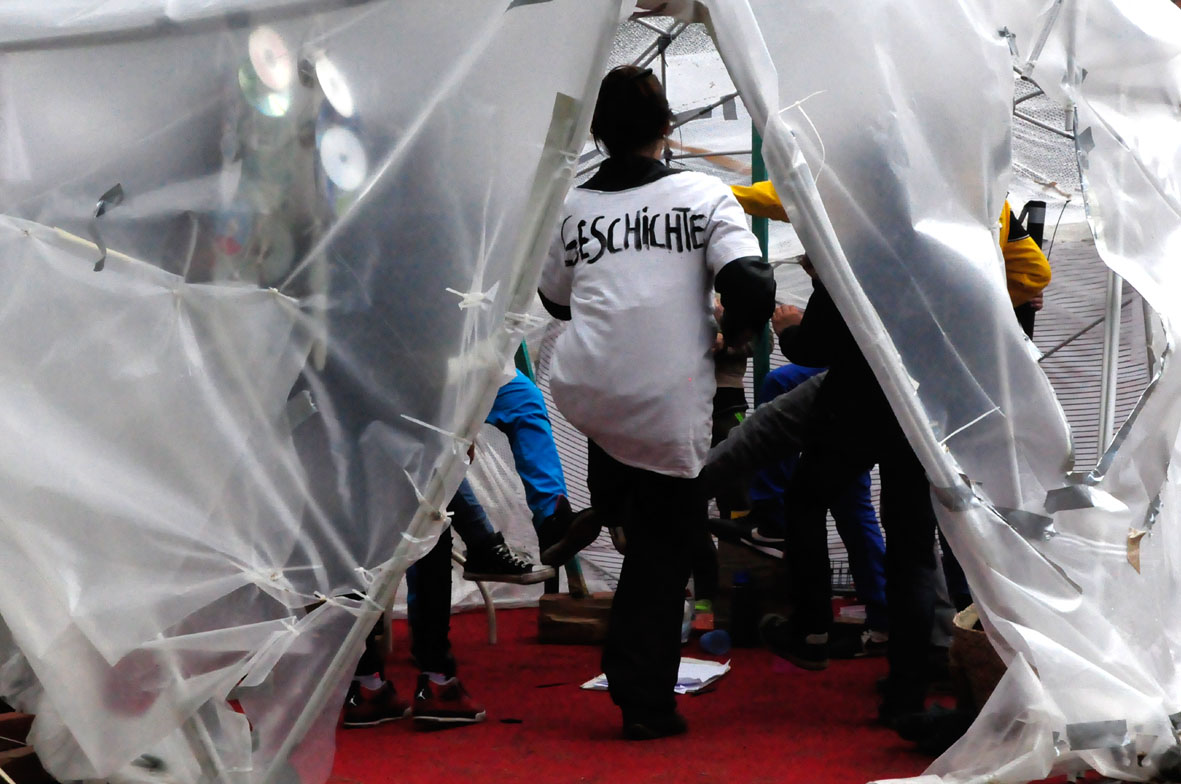
After the initial summer academy project, the idea of a campsite in the schoolyard was further developed as a social and artistic experiment: Camping Marianne, defined as a space for all forms of encounter. The camping team consisted of artists from various fields, including the architect collective raumlaborberlin and Kulturlabor e.V., a group that dealt with new forms of cooperation between education, art and science. This new version of Camping Marianne included artist residencies in which projects related to camping at school were developed. Participating in the three “Artists in Tents” were the curator Ruth Noack, the artist Seraphina Lenz and the institution StreetUniverCity Berlin. They expanded the relational perspective of the project. As the artistic director of “Camping Marianne”, sideviews supported the concept and the development of the project, curated the artists in tents and ultimately consolidated the artistic processes.

Categories
Game Game

Camping Marianne

Summer Academy

Social experiment part 1

Summer camp as a communal form of freedom was something of an obsession in the first half of the last century. It reflected the longing for the utopia of an independent social construction beyond the hegemonic order. Which ideal images of a community and its common experience can we construct and make visible today? Based on this question, a campsite was organized in the schoolyard of the Nürtingen elementary school on Mariannenplatz in Kreuzberg, Berlin. In the sense of a “system of giving”, all participants were invited to bring in material objects and their own diverse knowledge. The focus was on what a school is, what can be learned and who owns the schoolyard. We created an adventure camp of collective inventions while cooking and playing sports together. During dinner debates we discussed how we can live together in a new and different system. 

Categories
Game Game Theatre Theatre

WORLDwide… New

Is the world reality or is the world just what we imagine? 60 children from the Nürtingen elementary school in Berlin-Kreuzberg spent more than a year looking for possible answers. In this urban ethnographic experiment, students examined the social diversity in their environment on the basis of video interviews. They were confronted with a wide variety of topics: asylum seekers, politics, drug dealers, immigration and government. 

Using dramatic methods and video documentation, the research was made visible and tangible. The information on a wide variety of life plans and identities acquired in the interview workshop was then staged: in a three-week game, acting, directing, storytelling, costume design, visual arts and music were the motor that set a major negotiation process in motion. It turned out that identities and realities can be reconstructed. And that the rituals, self-images and attitudes can be changed, as can the world.